ORNAMENTAL PLANTS


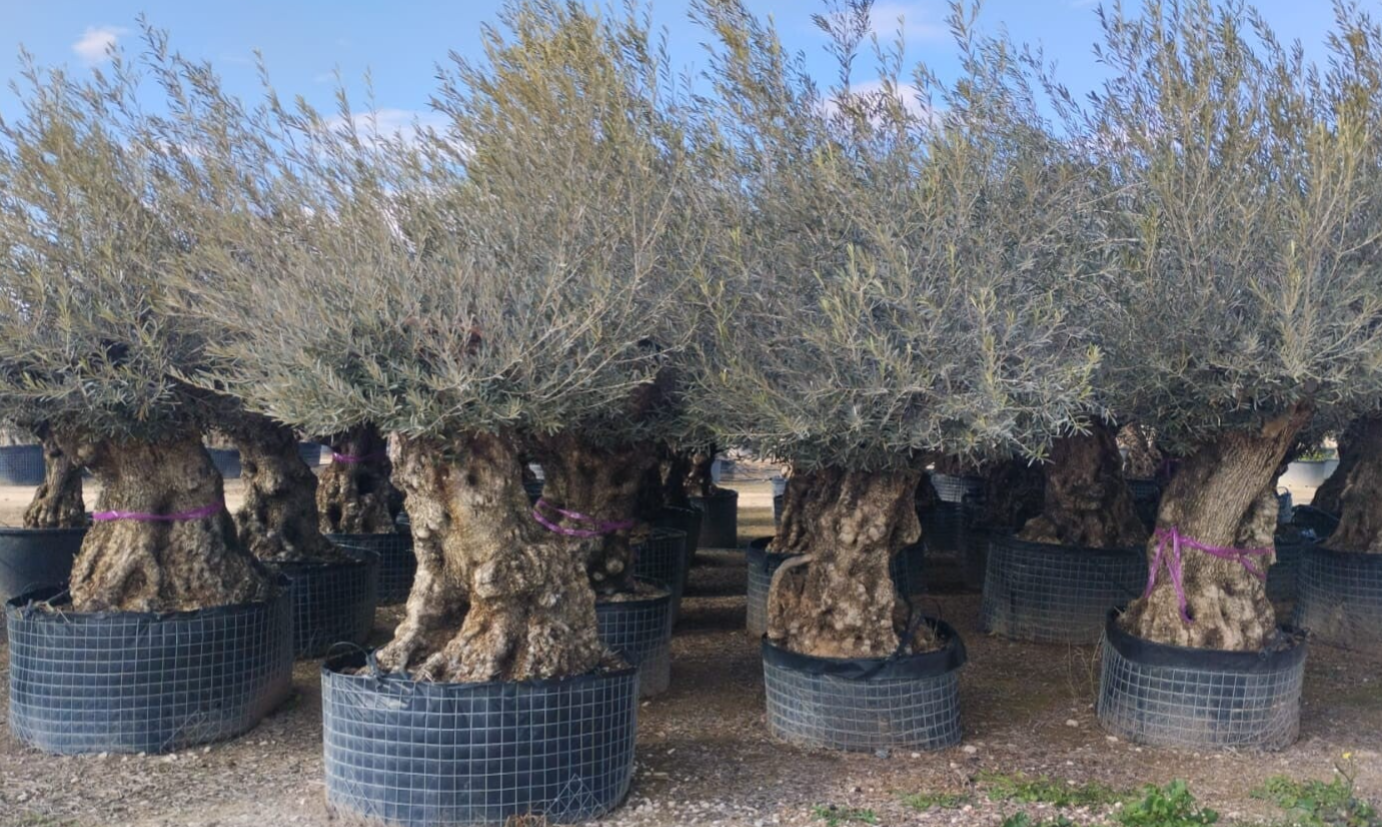


The olive tree scientifically known as Olea europaea is a beautiful, perennial fruit tree belonging to the Oleaceae family; native to the Mediterranean basin, it is renowned for its great longevity and drought resistance. It features a thick, gnarled trunk with grayish bark and a broad crown, capable of reaching heights of 2 to 10 meters and widths exceeding 2 to 4 meters. Its leaves are typically elongated, with a dark green or blue green upper surface and a silvery underside. It produces the olive the fruit from which oil is extracted which serves as a cornerstone of both Mediterranean cuisine and culture, symbolizing peace and wisdom.
The olive tree is a magnificent, distinctive specimen with a sculptural appearance ideal for producing olives and subsequently oil and perfect for Mediterranean garden design, landscaping, and the decoration of terraces and gazebos. Its longevity, ancient look, and thick, multi-branched trunk make it ideal for shaping; it adds a striking, ornamental, rustic touch to green spaces and serves as a stunning centerpiece for patios, pool areas, or as a focal point.
The olive tree is adapted to the Mediterranean climate, characterized by hot, dry summers and mild winters; however, it requires a certain number of "chill hours" with temperatures below 7°C or 12°C, depending on the variety during winter to flower properly. It requires an average annual temperature of 15°C to 20°C. While it can withstand summer highs of up to 40°C, the tree typically halts vegetative activity due to heat stress once temperatures exceed 35°C.
It can be planted in full sun in any soil type, allowing ample space and keeping it away from pipes and foundations, as the olive tree has extensive roots; planting is typically done between late winter and early spring, ensuring the site has excellent drainage to prevent waterlogging and root rot.
If the olive tree has just been planted in the ground, it needs to be watered generously, allowing the soil to dry out between waterings. If planted in a pot, it requires regular, moderate watering once or twice a week in summer and every 10–15 days in winter ensuring that water never pools in the saucer. It needs organic fertilizer or worm castings applied around the trunk once a year preferably in February or March to maintain the tree's vitality and encourage olive production. Pruning is essential in late winter or early spring to remove any shoots or branches growing from the trunk. Finally, it is important to keep an eye out for potential issues such as pests (like the olive fruit fly or scale insects) or leaf spots.